
October. 14th, 2023
VIVO Media Arts Centre
7:30pm
Queen Tilly and the Marys is a boisterous multi-modal counter point to a musical theatre act where comedic absurdity and camp materiality meet the radical potential of intergenerational play. Developed during the height of the COVID-19 pandemic, Elizabeth Milton’s work is a tragicomic ode to a group of Croatian women elders raised within the marginalized immigrant communities of East Vancouver.

Description
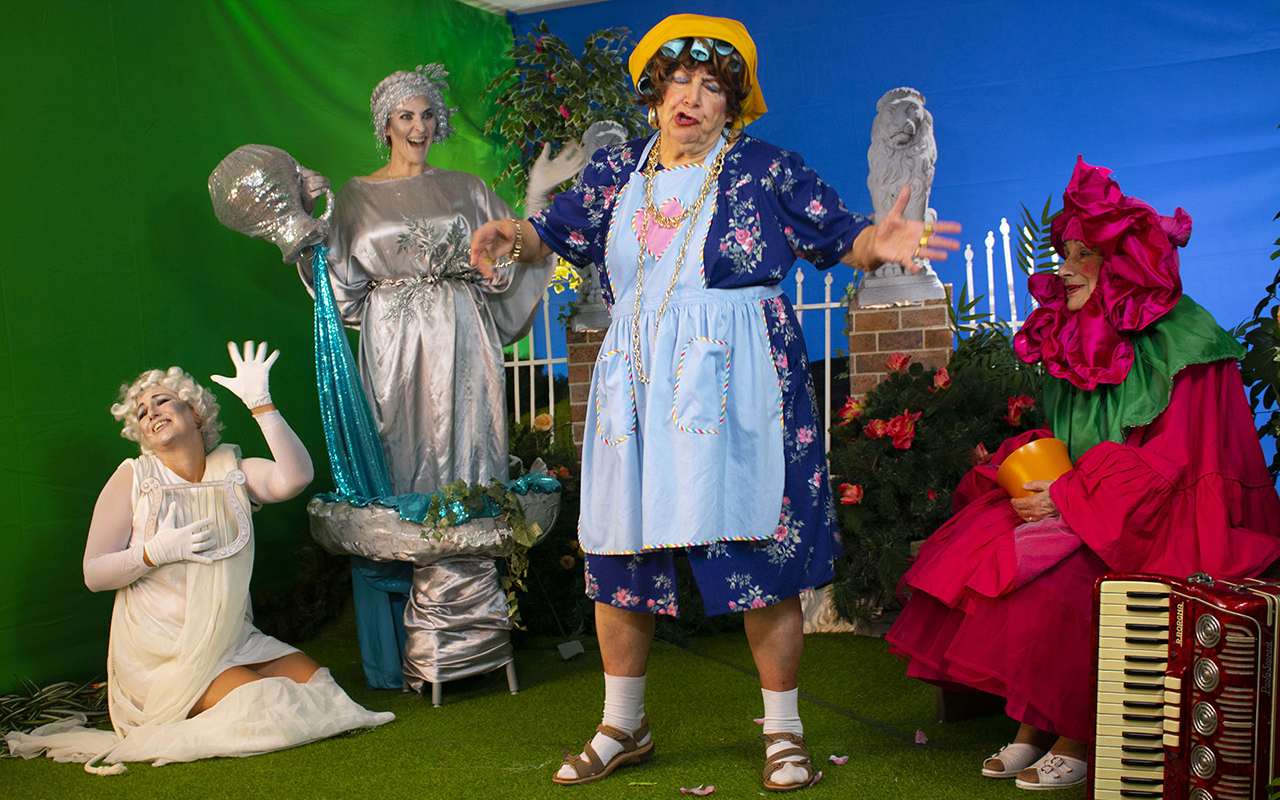
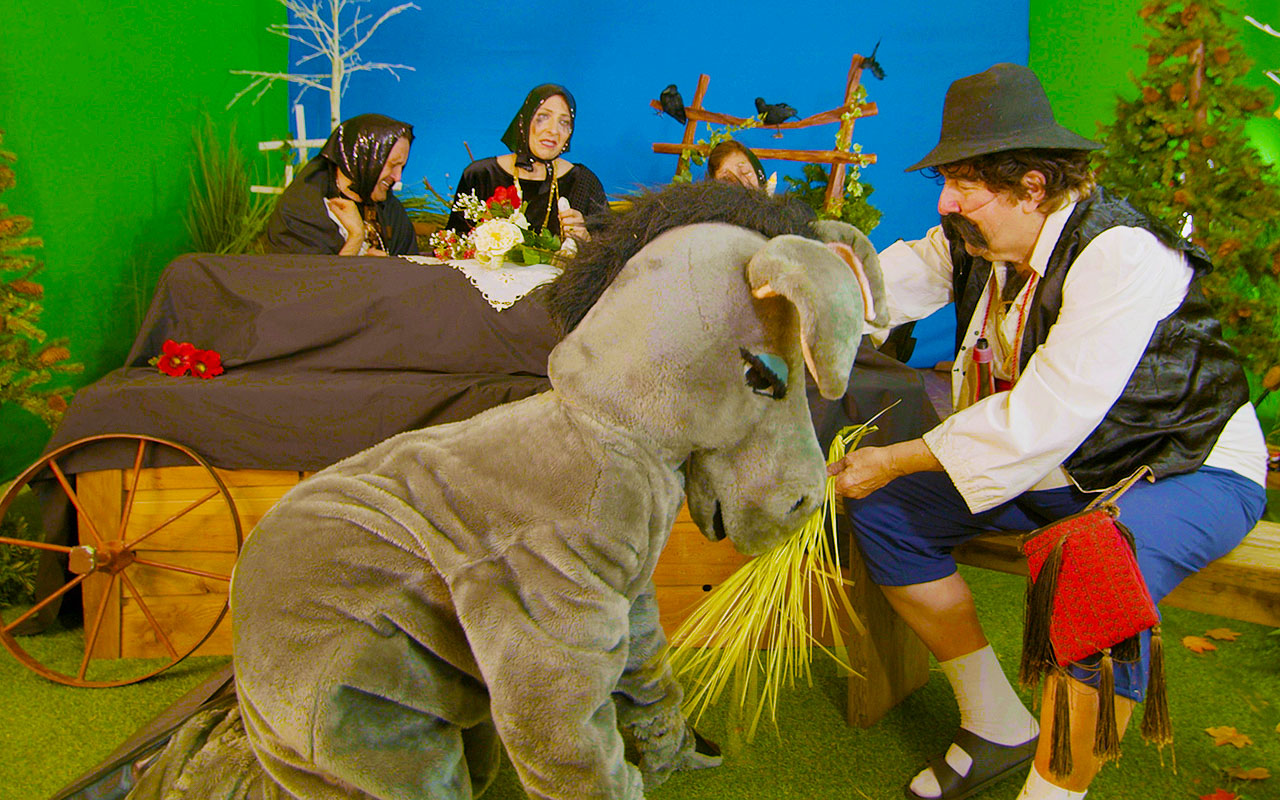
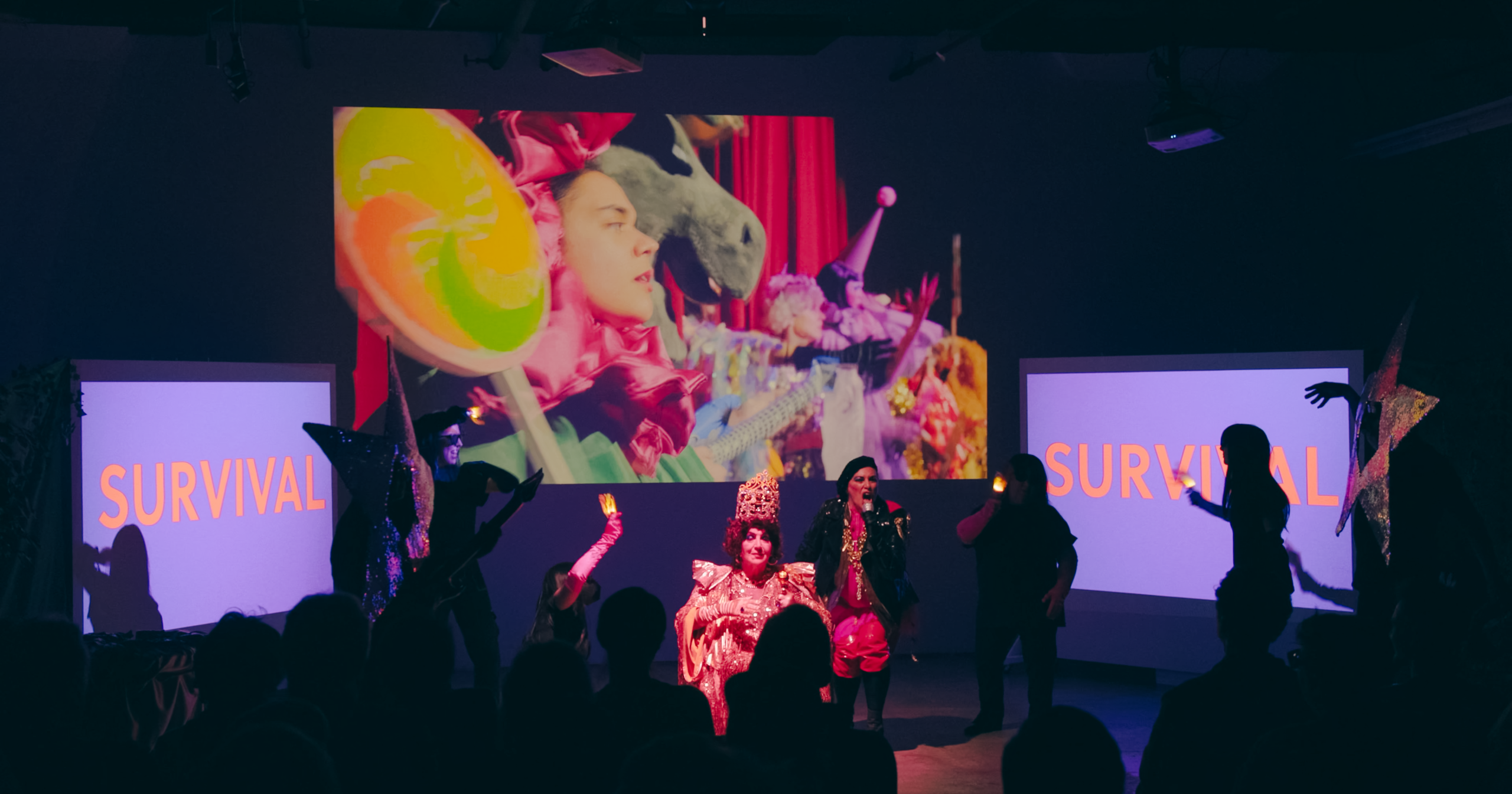
The performance began with a candle lit ballad to Milton’s matrilineal heritage, specifically the three formative women in her life: Tilly (Milton’s mother), Mary and Mare (her aunts). While these three characters take centre stage in the narrative, they are joined by a host of other performers as the piece transitions through its six subsequent acts: The Rose, Come On Get Happy, Send in the Clowns (The Mourners), Spoonful of Sugar, She Works Hard for Her Money, and Queen. Narrated interchangeably by the lead characters and a silver coated living statuette, played by artist Tara Travis, the acts followed a consistent structure, each framed by the recounting of a personal story and situated in a local site. Accompanying the live performers were three screens which provided visuals for the vignettes; stills, illustrations, and a variety of high drama musical numbers, previously staged by Milton and her team, added another layer this critical comedy.
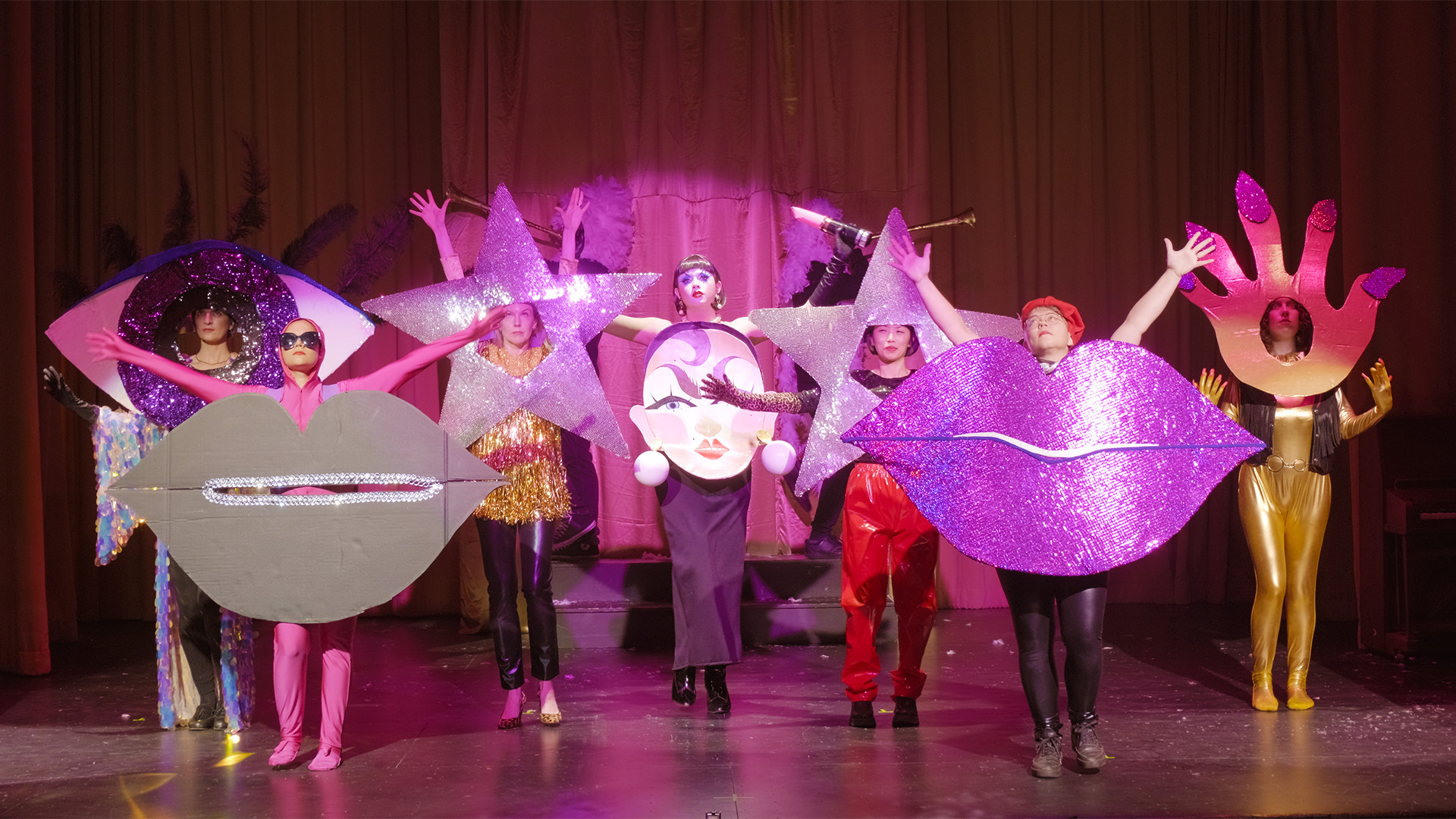
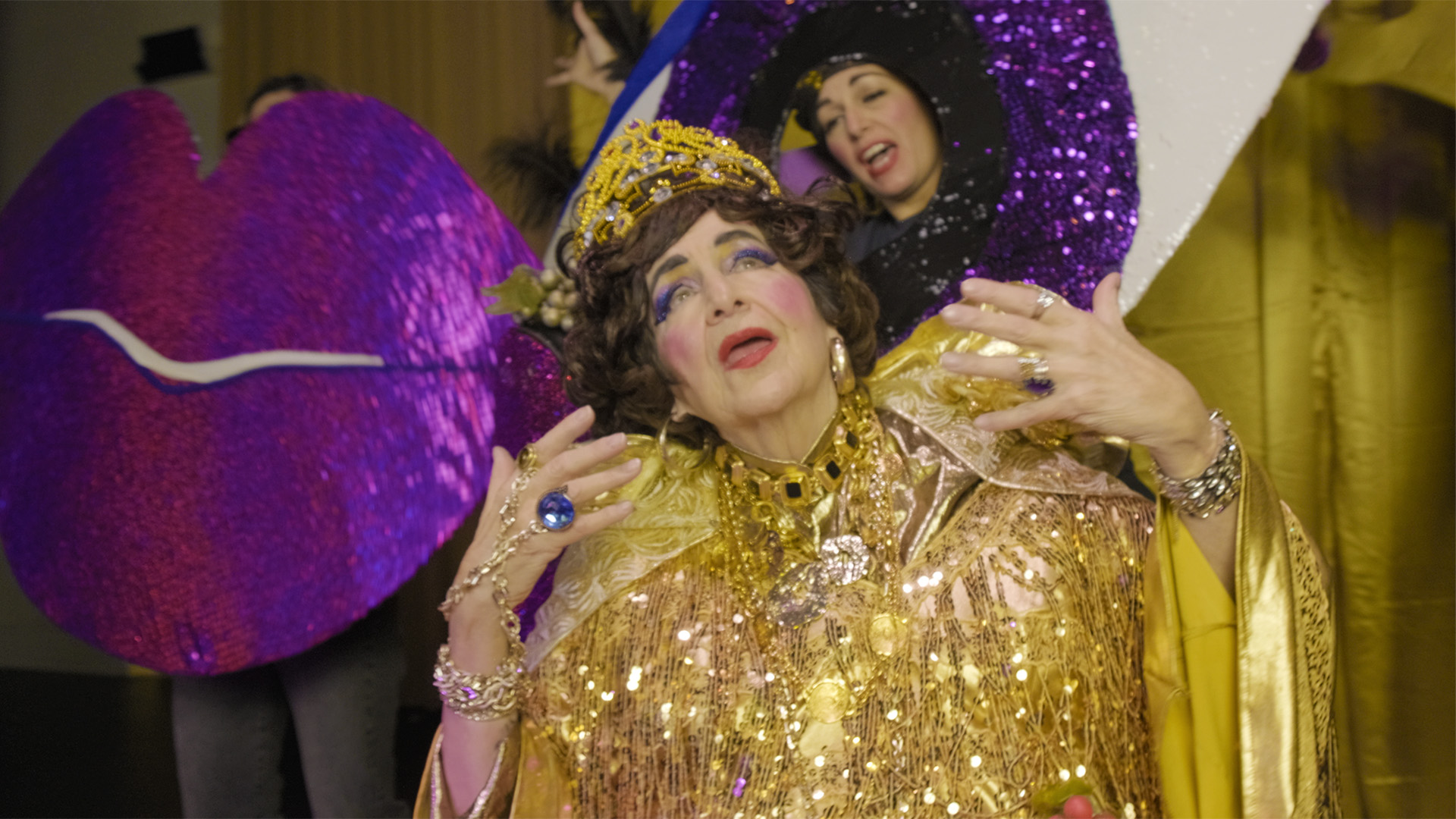
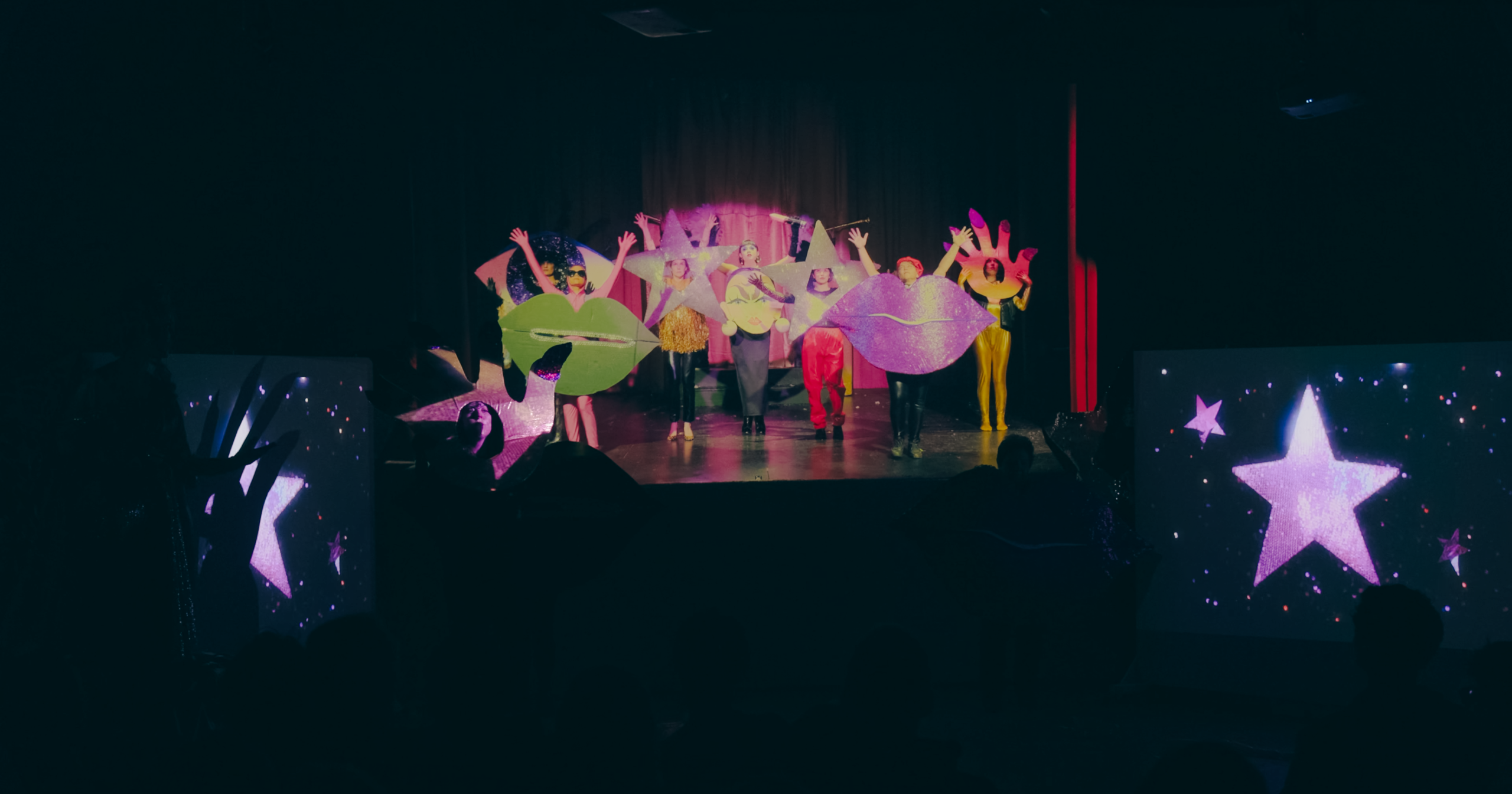
As the piece progressed themes of polyvocality became more prevalent. As the sincerity of the stories drawn from Milton’s personal familial history were met with hyperbolic enactments, the working and living conditions of this immigrant community in East Vancouver were re-animated. The performance ended with a luxurious “hail” to the central Queen Tilly. As gold sequins overflowed from Tilly’s on screen number, live performers in cut out star and flower costumes filled the stage, tenderly surrounding the lead characters as the lights went down.
Performers
Performers in Video and Live Performance: Myriam Banting, Gina Fabbro, Rosa Mattiello, Liz Milton, Tilly Kosovic Milton, Neil Pellegrino, Gerry Sandberg and Tara Travis.
Chorus Members from Video and Live Performance: Agnes Agosti, Erin Ashenhurst, Ana Beatriz Cortez Da Costa, Tomica Divic, Florita Garcia, Nico Field-Dyte, Nikola Jurlina, Lydia Lovison, Amy Lui, Milo Lee-Philp, Eva Lin, Drew Maguire, Amy Nugent, Madeleine Owen, Lindsey Shepek, Rita de Sousa, Elliot Sukorokoff, Gloria Tan, Elaine Tung, Ester Viage, and Annie Wong.
Review of Elizabeth Milton’s Queen Tilly and
the Marys
by Weiyi Chang
December 2023
Liz Milton’s performances are unabashedly campy. Throughout her career, Milton has often wielded the material excesses of consumer culture to question constructions of identity and self in contexts ranging from the wellness industry to popular culture to the service economy. Her visual vocabulary is expansive and indulgent, bringing together feather boas, glitter, chocolate bonbons, artificial flowers and media detritus to conjure exaggerated characters that push notions of identity and socially-conditioned subject positions past their limits. Milton’s approach to performance serves to highlight the malleability of our public and private selves, surveying the ways our constitutive identities are mediated, internalized, and enacted situationally.
In her Breakdown series (2013–2015), Milton casts herself as a histrionic woman in the midst of an emotional crisis. Incorporating objects associated with high femininity and domestic comfort—bubble baths, Ferrero Rocher chocolates, bathrobes, candy, pillows—the performances presage certain consumer-centric manifestations of self-care culture.
Her 2017 performance, Punching a Pillow Until the Sun Rises, critiques representations of women’s hysteria and the subjugation of feminine-coded emotions. Presented as a 12-hour long live stream from the Gladstone Hotel in Vancouver, Milton’s character waxes and wanes across emotional registers, alternately assaulting a pillow, dancing for the camera, and weeping forlornly as her dramatic stage make-up melts and smears across her face. The performance parodies the gendered coding of affect and confessional culture, set against the normally humourless world of high art.
Given Milton’s affinity for campy excess, it seems inevitable then that in her most recent performance, Queen Tilly and the Marys, she takes up the forms of that campiest of theatrical productions—musical theatre. Making its debut at the LIVE Biennale in Vancouver, Queen Tilly and the Marys blends video, performance, drag, karaoke and illustration to pay homage to a trio of larger-than-life women who played a formative role in Milton’s life and artistic sensibility: Milton’s mother, Tilly, and her maternal aunts, Mary and Mare.
These three characters form the heart of the performance and are joined by an extensive community of performers, ranging from Milton’s longtime artistic collaborators to extended family members to amateur performers from the womens’ basement church recitals first profiled in Milton’s 2010 video, St. Teresa’s Basement. The three-channel video, created with Sheila Poznikoff, consisted of interviews and documentary footage of a group of immigrant women as they prepared for a private vaudeville performance in the basement of a Catholic church in Vancouver. Milton and Poznikoff’s film documented the unseen second-lives of women as they construct elaborate sets built from domestic items and try on homemade costumes. Ensconced within the safety of a shared communal space, St. Teresa’s Basement captures a group of women as they explore alternate selves, adopting personas and characters that playfully lampoon figures from popular culture.
The DIY ethos and communal approach central to St. Teresa’s Basement is mirrored in the development of Queen Tilly and the Marys. The production largely re-purposed materials sourced directly from the women’s homes. The accompanying musical numbers were recorded at the Russian Hall in Strathcona, a venue that held significance in the women’s social lives, and the Shadbolt Centre for the Arts, where Milton was in residency in 2021. The musical accompaniment was performed by Milton’s longtime collaborators as well as family members, such as one of the Mary’s sons, who played a traditional Croatian mandolin called the tamburitza. The costumes were constructed out of found fabrics and materials, sewn together by Milton’s partner and the cadre of women who had engaged in their ad hoc performances over the years.
Each of the six acts consists of a similar, repeatable structure. The story is narrated alternately between one of the title characters and performing artist Tara Travis, who plays an omniscient silvered statue, simultaneously evoking classic Greek architectural forms as well as the ubiquitous living statue buskers that congregate around major tourist hubs. On the rear wall, vibrant illustrations set the scene for the story. The narration is a prelude to an original musical number, accompanied by a costumed dance corps carrying ready-made props—glittery stars, sausage balloons, artificial flowers—as they enact characters, imagery, and themes from the story.
If St. Teresa’s Basement bore witness to their private acts of performative resistance, Queen Tilly and the Marys gives the title characters and their motley crew of basement performers a platform from which to welcome others to enjoin in their acts of joyous play. With Milton’s well-honed sense for campy excess, Queen Tilly and the Marys is a raucous and highly enjoyable performance. The musical numbers are catchy and memorable, the illustrations have the soothing aesthetic of children’s storybooks rendered in bold colours and soft lines, and the set design is pleasingly dilettantish.
Susan Sontag writes that camp, “is a kind of love, love for human nature. It relishes, rather than judges, the little triumphs and awkward intensities of “character”.”1 Similarly, Queen Tilly and the Marys is infused with love and an unparalleled generosity towards its subjects and their stories, with all the quirks and eccentricities that come with a life well lived. The warmth with which Milton and her cast tell their stories invites the audience’s sympathy, who rewarded the performance with a thunderous applause. The performance delights in the sentimental, but the lightness and humour with which Milton constructs her title characters’ stories—stories that have been passed around the kitchen table for decades—avoids cheap emotional tricks and instead emphasizes the fortifying capacity of comedy.
In his three-part essay on comedy, French philosopher Henri Bergson argues that laughter serves a fundamentally social purpose, namely, to keep us elastic in mind, body, and character. Elasticity enables the subject to adapt as needed to the changing conditions of society, allowing the self to dispense with learned or habituated behaviours. For Bergson, the aesthetic element also comes into laughter and comedy’s effect on the subject by alleviating the burden of self-preservation and instead allowing subjects to “regard themselves as works of art.”2
Though the conceptualization of Queen Tilly and the Marys predated the COVID-19 pandemic, most of the production took place in its midst. At the time, Milton tells me, she had returned to live with Tilly, taking care of her ailing and increasingly fragile parent. The two Marys also moved in as they dealt with their own health issues. For many, the responsibility of caring for elderly family members is a burden, fraught with financial challenges, unresolved family traumas, and unsupportive social and economic systems,3 but working together on the production proved to be a source of sustenance, an activity to uplift their spirits in spite of the illnesses they each struggled to overcome. Coupled with the added stressors of a global pandemic, one that kept many of us trapped at home and forced into physically and emotionally stultifying routines, the act of role playing and laughing with one another and their friends gave them the adaptive capacity to deal with the psychological and physiological toll of illness.
When I spoke to Milton about this work, she expressed admiration for the women’s longstanding private performances, and their commitment to themselves, their community, and their craft despite the often difficult personal, political, and economic circumstances constraining their lives beyond the confines of the local church. I asked Milton if her mother, having performed in private for decades with a closed audience of friends, appreciated the response; she said she loved it. Prior to its public debut, Milton tells me, both of the Marys passed away; their roles in the LIVE Biennale staging are played by two friends who were involved in the development of the production. If their stage versions of themselves are any indicator, however, I suspect they too would have appreciated the response. Having been freed from the “burden of self-preservation”, their lives, their stories, and their sense of humour lives on, immortalized now as a work of art.
For Milton, what this group of women managed to achieve was a community in which they could act out fantastical, alternative selves in a safe and mutually supportive environment. The excessive theatricality of their performances, their unbridled eagerness and embrace of play forms, their ad hoc set design and amateurish characters are a makeshift space from which to explore identities, and behaviours that might otherwise be subjugated in less welcoming environments—the workplace, the home, and the spaces of art. Queen Tilly and the Marys is a fittingly endearing tribute that explores the social and communal bonds forged through comedy, the role of fantasy and play as a tool for survival, and the potent intergenerational stories that we carry in our flesh.
- Susan Sontag, “Notes on Camp”, in Camp: Queer Aesthetics and the Performing Subject: A Reader, ed. Fabio Cleto (Ann Arbor: University of Michigan Press, 1999), 65. ↩︎
- Henri Bergson, Laughter: An Essay on the Meaning of the Comic, trans. Cloudesley Brereton and Fred Rothwell (New York: MacMillan Company, 1914), 20. ↩︎
- For a recent US-centric article on the subject, see Jaeah Lee, “The Agony of Putting Your Life on Hold to Care for Your Parents,” The New York Times, March 28, 2023. https://www.nytimes.com/2023/03/28/magazine/elder-child-care-millennials.html. ↩︎