
October. 14th, 2023
Woodwards Atrium
2:00pm
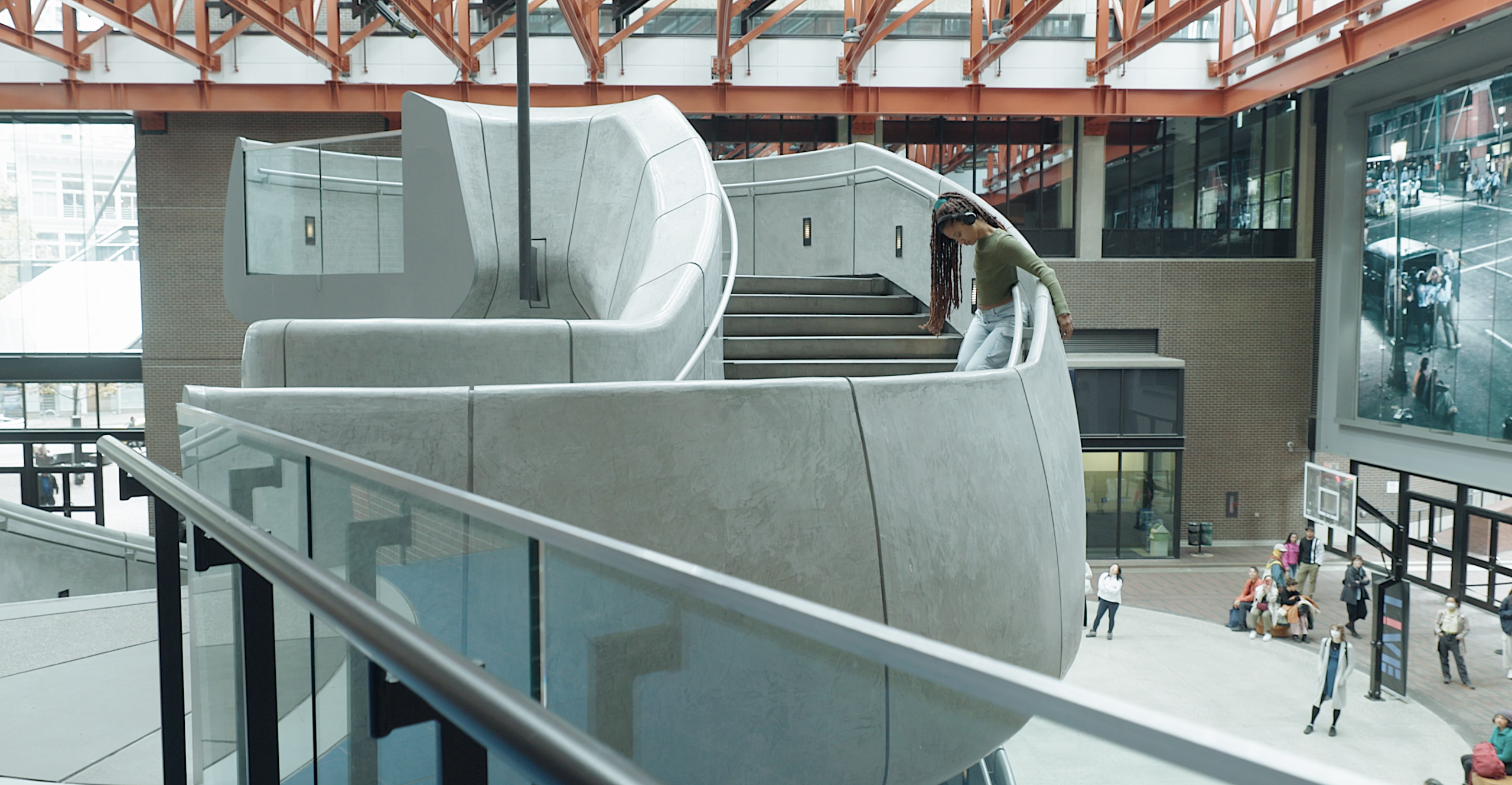
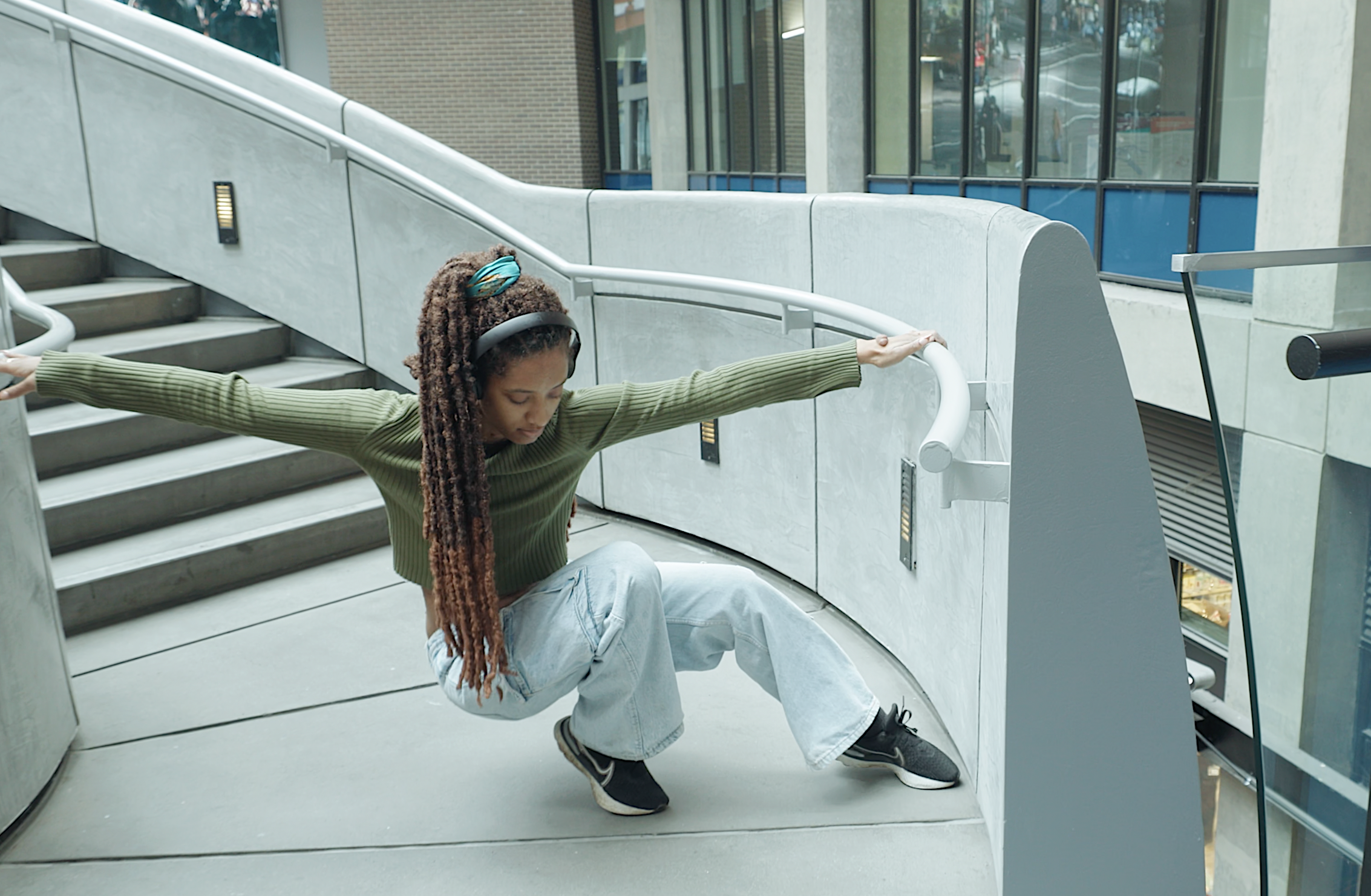
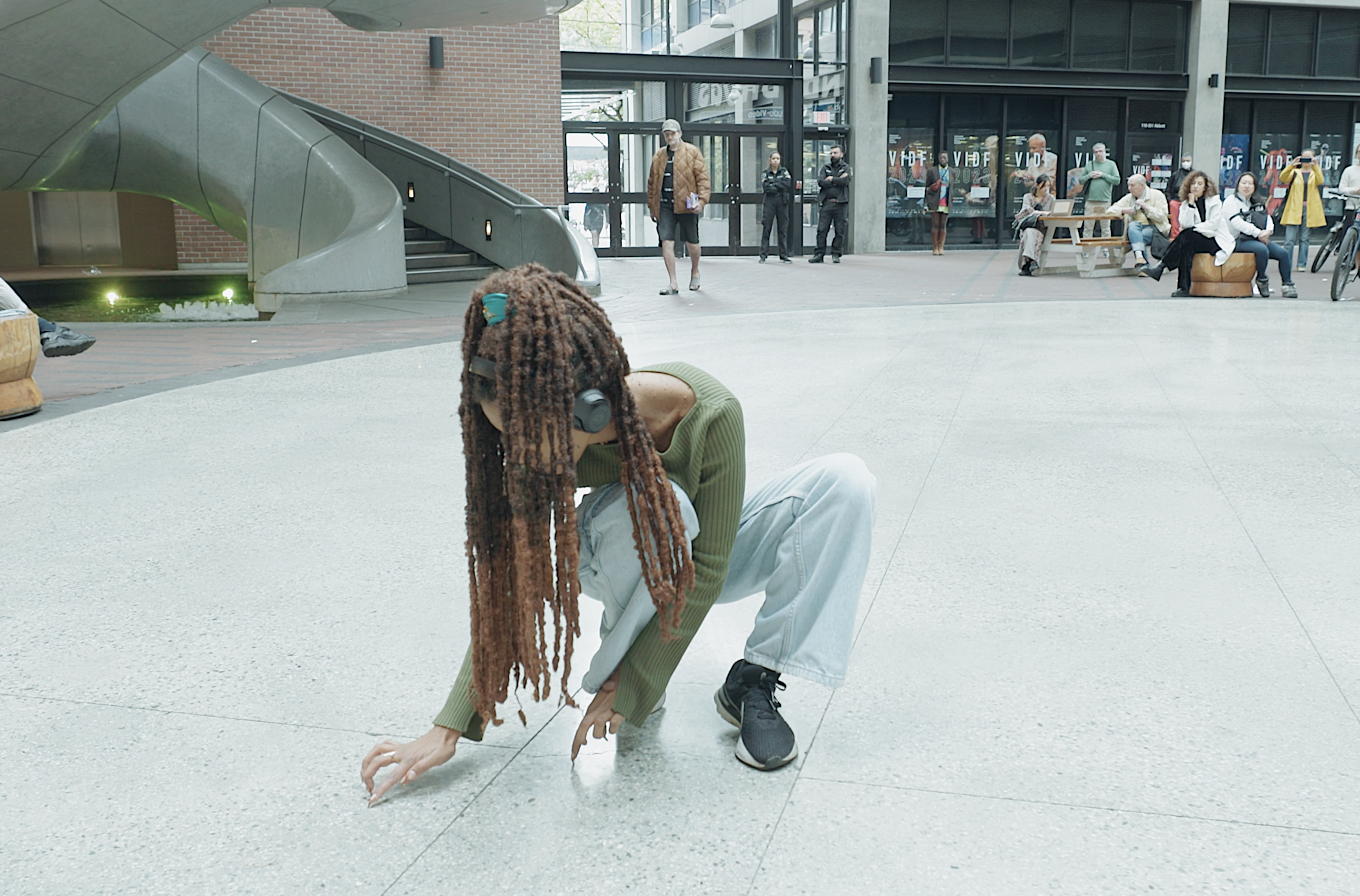
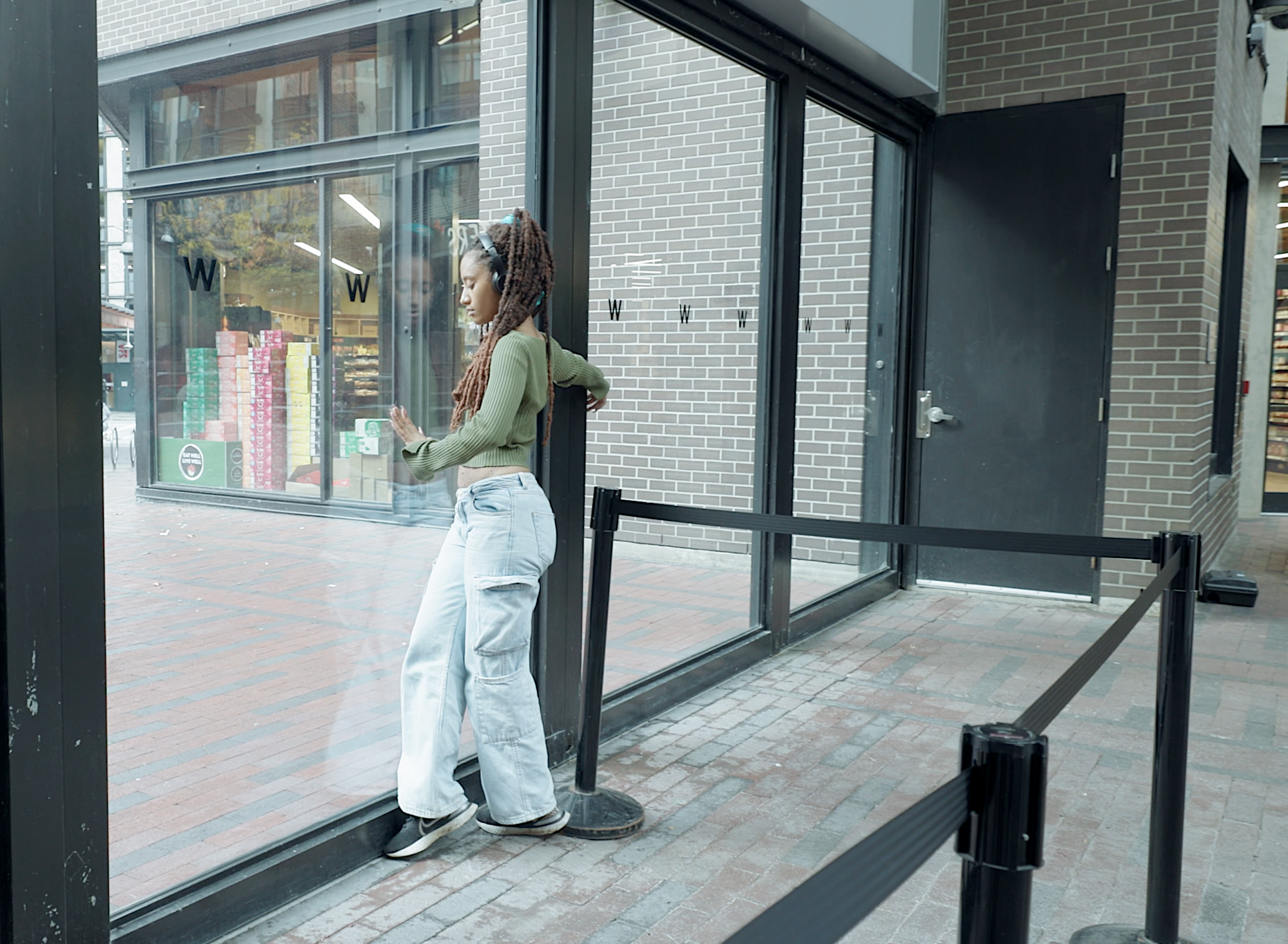
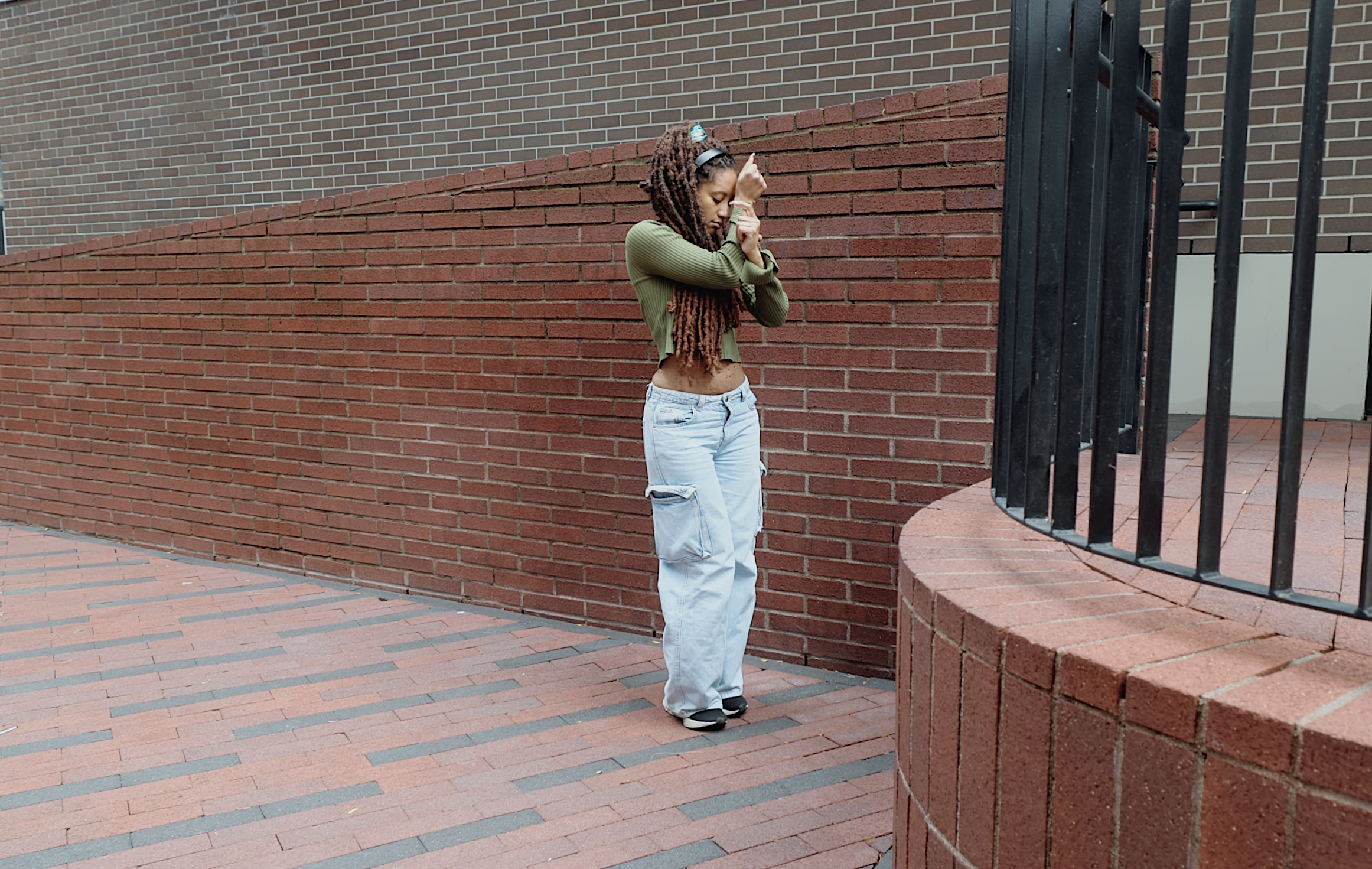
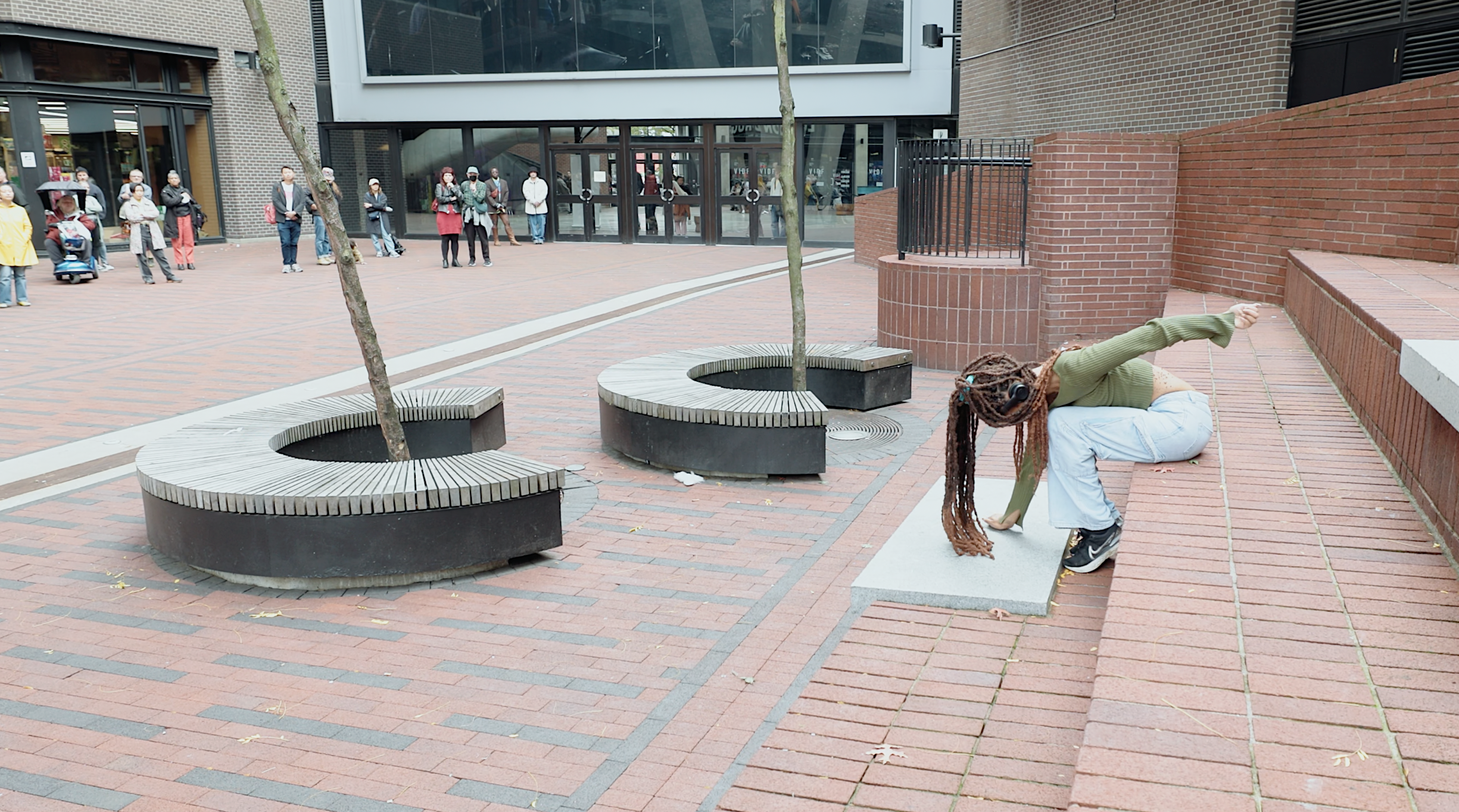
In her performance ground and cover me, Jessica Karuhanga engages with the architecture of institutional and build environments to navigate the physical and figurative contours of social and public spaces. As Karuhanga enacts gradual, intuitive and deliberate movements in response to her surroundings, ground and cover me acts as a choreographic inquiry towards conjuring otherwise in spaces that often insist upon erasure of the temporal-spatial lived experience of Black subjects. In this work, Karuhanga uses headphones to listen to a personalized soundtrack. Through this sonic barrier she is both encased in her own world and left vulnerable to the public. Here, boundaries of access and trust are re-negotiated between the performer and the viewing public.

Description
Starting from the top of the large concrete spiral staircase which swirls in a corner of the Woodwards Atrium, Karuhanga moved slowly into view of the crowd gathered below. In her own sonic world, she moved smoothly with the sinuous walls and railings, dipping and draping herself around the architectural features of the staircase as she gradually made her way towards the ground level. The squeaks of Karuhanga’s sneakers and tapping of her acrylic nails softly vied for attention amidst the everyday noises of the space: the rolling fountain, nearby traffic, and downtown shoppers, commuters and workers passing through. A few times someone came through with a loudspeaker, briefly proving a disjunct beat for her movements. Half-way through the performance, an ambulance siren consumed the sonic architecture of the atrium, yet Karuhanga, who was crouched close to the ground drumming her fists on the marble flooring, remained engulfed in her own internal beat-logic. The embodied piece progressed as Karuhanga made her way towards the glass doors under Stan Douglas’ large scale installation, Abbott & Cordova, 7 August 1971 (2008), a photographic recreation of the police riot which ensued during a peaceful protest against the ongoing drug laws and raids in the early 1970s. As Karuhanga moved outside, tenderly navigating the courtyard’s brick work, ground and cover me came to a close. Settled on the steps behind SFU, Karuhanga removed her headphones, dissolving the barrier and returning herself and the viewers to another kind of embodied existence within that space.